You may have started planning your Pride campaigns, but are you getting them right?
Whilst commemorated as a celebration of queer liberation, it is hard to ignore the ongoing over-commercialisation of this event. For many LGBTQ+ individuals, distasteful or invasive Pride campaigns can inflict lifelong damage to brand relationships.
Pride Month shouldn’t just be viewed as a sterile date in the marketing calendar; instead, it is an homage to a movement, the embracing of multiple identities and a much-needed call to action for equality. Engaging with Pride offers unique opportunities for organisations to show solidarity with the LGBTQ+ community. However, with the evolving landscape of corporate social responsibility comes growing consumer scrutiny.
Within this comprehensive guide, we will explore Out loud’s insider LGBTQ+ marketing tips for how your organisation can engage with Pride meaningfully, build a year-round commitment to diversity, equity and inclusion, and avoid the commonplace labelling of “rainbow-washing”.
TL;DR:
To avoid “rainbow-washing,” brands must move from performative June-only campaigns to authentic, year-round allyship. Success in Pride marketing is built on internal policy, diverse representation, and tangible social impact.
-
Inclusivity Starts Internally: Audit your workplace first. Ensure healthcare, parental leave, and conduct policies genuinely support LGBTQ+ employees before marketing to the community.
-
Move Beyond June: Authentic brands support the community throughout the year by acknowledging the full LGBTQ+ calendar (e.g., Trans Day of Visibility, LGBTQ+ History Month).
-
Platform Queer Voices: Shift from “queer-coding” to “queer-centring.” Hire LGBTQ+ creators, tell real stories, and ensure they are compensated fairly.
-
Transparency is Non-Negotiable: Be specific about where donations go. Avoid political contradictions where corporate donations fund anti-LGBTQ+ legislation.
-
Measure Meaningfully: Look beyond ROAS. Success should be measured by community sentiment, employee feedback, and the direct impact of educational and financial contributions.
Key Takeaway: Pride is a protest, not a sales event. If you aren’t willing to stand by the community when it’s controversial, don’t wear the rainbow when it’s profitable.
1. The History and Importance of Pride Month for Brands
Before proposing a Pride-exclusive hashtag or changing your company’s logo to a rainbow background, it is imperative to understand the significance of Pride’s existence.
Pride began as a riot, specifically the Stonewall Uprising of 1969, led by marginalised voices within the LGBTQ+ community, most notably trans women of colour.
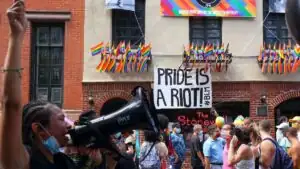 So why does pride matter for brands?
- Economic Influence: The “Pink Pound” represents trillions in global purchasing power, an attractive metric that is only growing year by year.
- Talent Acquisition: There is a shifting consensus among Gen Z and Millennial workers that they are much more drawn to working in corporations that are unabashedly inclusive.
- Social Impact: Brands of all scales have a platform that can help to move the needle on human rights and political justice due to their influence on policy and public opinion.
2. Internal Inclusivity: Auditing Your Workplace Culture
There are multiple areas that are often overlooked when it comes to enhancing your Pride campaigns authenticity. Companies often neglect their in-house policies for inclusion. This matters just as much as your marketing campaign.
With the rising democratisation of citizen journalism, it is incredibly easy for a company to get “exposed” as promoting inclusion whilst its internal workplace culture remains stagnant.
Non-negotiables When It Comes to Auditing Your Internal Policies:
- Healthcare: Do your workplace insurance plans cover gender-affirming care? Inclusive parental leave policies for same-sex couples?
- Conduct: Is your company actively enforcing policies against anti-social behaviour – homophobia, biphobia and transphobia in the workplace?
- Training: Is your company setting aside budget for training on diversity, equity and inclusion? Is this training mandatory or just a “tick-box” exercise?
The LGBTQ+ community is hyper-vigilant of inauthenticity. Laying down the foundations by creating a safe, inclusive environment within your workplace is paramount to giving your marketing campaign leverage.
3. 4 Pillars of an Authentic Pride Marketing Strategy
Tone is vital in the brainstorming stages of your campaign.
It is important that your campaign feels as though you’re “standing beside” the community rather than blatantly “selling to” them. To achieve this it is important to reinforce the four pillars of the modern Pride strategy: longevity, voice, education and financial transparency.
A) Long-Term Prioritisation Is King
Support and identity of LGBTQ+ individuals within your brand should not mystically disappear on July 1st.
Companies that get it right, are the ones who are seen to be actively advocating for the community throughout the whole year. Requiring a shift from “campaign thinking” to “commitment thinking”.
A Brief Reminder of Key Events in The 52-week Pride Calendar:
Awareness from your marketing team of the wider LGBTQ+ liturgical calendar is a key player in avoiding the “rainbow-washing” label. Consider incorporating these key dates into your social media and corporate social responsibility planning.
 February: LGBTQ+ History Month (UK) – Honour the pioneers of queer liberation with educational content that turns reflection into action.
- March 31st: Transgender Day of Visibility – Celebrate the living trans community. In a climate of rising transphobia, visible brand allyship has never been more vital.
- April 20th – 26th: Lesbian Visibility Week – Spotlight the lesbian experience, past and present. Use this week to centre a community too often sidelined in mainstream marketing.
- May 17th: International Day Against Homophobia, Biphobia and Transphobia – Go global against stigma. Use your brand’s reach to advocate for justice and challenge anti-LGBTQ+ bias worldwide.
- October: LGBTQ+ History Month (US) & National Coming Out Day – A time of reflection, storytelling and community support during the shift to autumn.
- November 20th: Transgender Day of Remembrance – An important day to pay due respect to those trans lives lost to violence.
There are plenty more events within the year that are equally worth drawing attention to. This is just a brief idea of key moments where your company can show solidarity to the community, exclusive of June.
Fundraising for or partnering with LGBTQ+ charities is a great way to show that your company actually stands behind its motives, whilst also giving you exposure within queer spaces.
B) Provide Space For LGBTQ+ Voices
Don’t just let your marketing team “speak on behalf of” the community; give queer individuals the microphone. This is the difference between “queer-coding” (relying on subtext and hints) and “queer-centring” (allocating queer experience as the heart of the story).
- Collaboration with Creators:
 With culture shifting to an environment where giving credit to creators is non-negotiable, you must platform LGBTQ+ talent across every medium. Hire queer artists, designers, and influencers for every level of your campaign. And importantly, paying in “exposure” no longer cuts it.
 - Convey Real Stories: Real stories drive real connection. Pride is deeply personal, so for your campaign to resonate, you must feature a diverse spectrum of LGBTQ+ voices (with consent and appropriate compensation!).
C) Use New Angles to Offer Education over Promotion
Following the rising trend of rainbow-washing, it is important for your marketing campaign not to embellish overdone queer tropes. Consult LGBTQ+ individuals to validate your presentation of queer experiences. So many times, it appears companies are playing into stereotypes with an out-of-touch understanding of the real experience.
Look at the present, at the future – what current legislative challenges are queer individuals facing at present?
For example, the stripping of trans individuals’ rights nationwide, and how we can combat this, would be a great place to start when looking at your 2026 Pride campaign.
Marketing that leaves an impact, is marketing that educates too. It not only builds greater reverence for your brand’s genuine care for social change, but also leaves more of an emotional impact on your consumers. Take a look at the ‘Chosen Family’ campaign by H&M from 2022.

D) Transparency in Financial Support
Honesty surrounding where your financial support is going is key. This not only matters when vetting your company’s wider investments and whether they are funding causes that are anti-LGBTQ+, but also when endorsing “Pride collections” on a commerce-level.
Ensuring that you specify where the donation is going. Labelling such as “100% of proceeds are going to [LGBTQ+ Charity]” is far more impactful than “a portion of proceeds”. And, on that note, research your charities and ensure they are genuinely helping in their desired field.
4. What is Rainbow-washing? Common Pitfalls to Avoid
When a company uses LGBTQ+ imagery to signal support without doing any substantive work to help the community, this is deemed “rainbow washing” (or “pride-baiting”).
To avoid this, look out for:
| Action | The Damage |
|---|---|
| The June-Only Logo Change | Reverting your logo on July 1st is a red flag. It tells consumers your support is a seasonal transaction, not a year-round commitment. The damage to your brand’s credibility can be permanent. |
| Political Contradictions | Political contradictions kill brands. Financing anti-LGBTQ+ legislation while waving a rainbow flag isn’t allyship; it’s hypocrisy. E.g. when Toyota sponsored Houston Pride whilst having donated $601,500 to anti-LGBTQ+ politicians since 2019. |
| Ignoring the “T” in LGBTQIA+ | Excluding transgender and non-binary voices exposes a brand’s lack of depth. There is no LGBTQ+ without the ‘T’—if your campaign isn’t gender-diverse, it isn’t inclusive. |
| Tokenism | Using queer models in advertising whilst having zero queer representation across your company, especially in leadership positions. |
5. Mini Content Strategy & SEO Pride Guide
As a leading LGBTQ+ digital marketing SEO agency, our expert team knows that making your digital strategy intentional, ensures your campaign’s message reaches the right audience, at the right moment.
Keywords and Search Intent
When creating Pride-related content, terms that reflect values rather than products are often favoured by crawlers. For example:
- Inclusive workplace culture
- Supporting LGBTQ+ non-profits
- History of Pride movement
- How to be an LGBTQ+ ally
It is also important to consider different types of search intent. Whether that is informational, navigational, and transactional and then tailor your content accordingly to maximise visibility and engagement.
Social Media Content Strategy
 Maintaining visual integrity is vital when displaying how up-to-date on intersectionality your brand is. As soon as a customer feels excluded, that trust will become near impossible to regain. A great example of this is using the correct flag e.g. Progressive Pride Flag vs traditional 6-stripe rainbow flag.
Social media thrives on friction, but your comment section shouldn’t be a battlefield. Active content moderation is a fundamental act of allyship. Leaving your LGBTQ+ followers exposed to hate speech isn’t just an oversight, it’s a failure of protection that makes your campaign feel hollow and disingenuous
Equally, different platforms also require different approaches. What resonates on TikTok may differ significantly from LinkedIn or Instagram, and adapting your tone and format accordingly can greatly enhance engagement.
6. Measuring the Success of Your Pride Campaign
Your campaign may not always hit every mark, but the companies that are proactive in rectifying and understanding why their marketing did not resonate with LGBTQ+ individuals, are the brands that will ultimately build long-lasting relationships with the community.
Stop obsessing over immediate ROAS (Return on Ad Spend). The true ROI of a Pride campaign lives in earned trust and brand sentiment. This long-term brand loyalty often is a key metric that doesn’t show up on a standard dashboard.
Instead, consider these metrics:
- Sentiment Analysis: What was the lasting impact of this campaign on the community? Did a large proportion of the community feel represented in your campaign?
- Employee Feedback: How did the queer workers, who know your brand the best, feel represented and proud of the marketing the company did?
- Direct Impact: What was the total sum of money raised? Do you have a measure of the impact of this figure within the charity? How many people who interacted with your campaign delved further into the educational resources provided?
7. Out loud’s Checklist for a Successful Pride Campaign
Pride Campaign Checklist
Conclusion: Allyship is a Verb
When people’s identities and safety are at stake, Pride marketing is becoming an increasingly high-stakes and positively impactful endeavour. That’s why it’s more important than ever to get it right. When done correctly, it builds deep brand loyalty and contributes to a more equitable world. When done poorly, both your broader customer base and the community can feel alienated.
The key takeaway from us here at Out loud? Pride isn’t just a campaign – it’s an ongoing commitment. The most successful organisations are the ones who take Pride in their stride, unbound by a specific month. That means that if your brand is unwilling to stand beside the community when it is “inconvenient” or “controversial”, then it shouldn’t be adorning the rainbow in June, when it is suddenly profitable.
If you want assistance in making your campaign bold, consistent, but most importantly, authentic – explore our range of digital marketing services, to see how we can help make your Pride campaigns both impactful and resonate with the community.
Key Takeaways:
- Pride marketing must shift from performative, June-only campaigns to authentic, year-round allyship.
- Internal inclusivity is critical. Ensure your policies genuinely support LGBTQ+ employees before marketing externally.
- Move beyond Pride Month by recognising and engaging with the full LGBTQ+ calendar.
- Centre LGBTQ+ voices by collaborating with, platforming, and fairly compensating queer creators.
- Focus on education over promotion to create meaningful, culturally relevant campaigns.
- Be transparent about financial contributions and avoid political or ethical contradictions.
- Avoid “rainbow-washing” by backing up messaging with real action and long-term commitment.
- Measure success through community sentiment, employee feedback, and tangible social impact, not just ROI.